Vorträge
Einträge: 8
2025
-
The Ezafe as an Aspectual Marker in Copular Constructions of the Kobani Variety: Stage-Level vs. Individual-Level Predicates
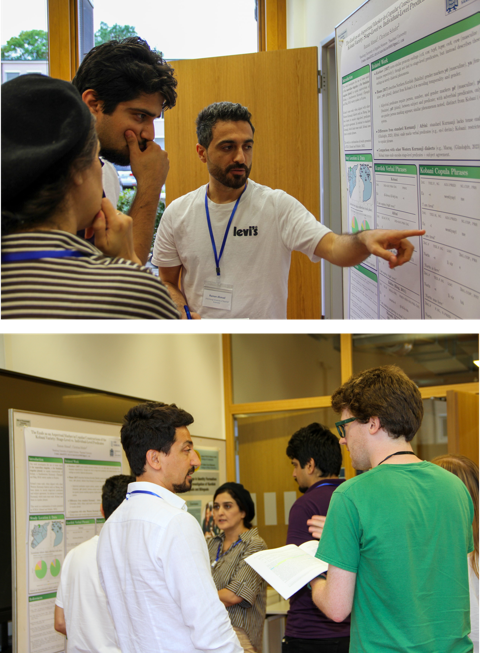
This work investigates the use of tense ezafe (î for masculine singular, e for feminine singular/plural) in copula constructions of Kobani, a Southwestern Kurmanji variety spoken in Rojava. Aligning with other Western Kurmanji dialects like Maraş, Kobani’s tense ezafe encodes stage-level predicates and subject agreement. Unlike standard Kurmanji, which lacks tense ezafe or some dialects like Afrini, where ezafe reportedly marks verbal predicates (e.g., ez-î derim ‘I am going’), Kobani restricts this to copular phrases, contributing to our understanding of morphosyntactic diversity within Kurmanji dialects.
-
Dialectal Filtering: Synthesize Text Corpora for Kurdish Varieties by Enriching Datasets with Multi-Labels
Kurdish, a low-resource language with extensive dialectal variation, faces significant challenges in NLP due to noisy, mixed-dialect text corpora. This research introduces a dialect-aware text filtering framework to preprocess and enrich Kurdish datasets, synthesizing variety-specific sub-corpora for underrepresented dialects (see Figure 1). By leveraging lexicographic features, this approach generates over 100 sub-corpora from Northern Kurdish data, offering resources for dialect-specific NLP tasks but has currently limitations in precision.
-
MTACR: Multilingual Text As Corpus Repository - Improving Machine Translation of Low-Resource Languages
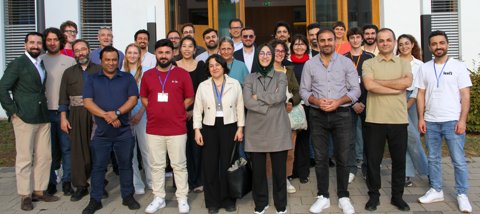
At MLT group of the DFKI on March 18, 2025.
2024
-
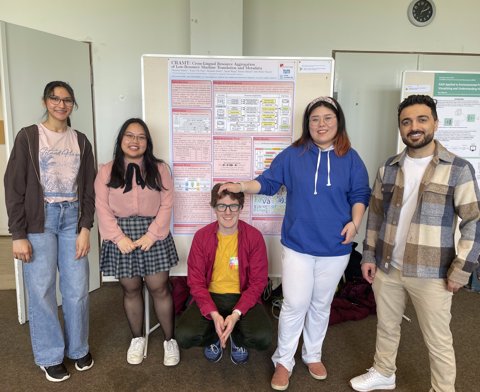
CRAMT: Cross-Lingual Resource Aggregation of Low-Resource Machine Translation and Metadata
Here we presented the current state of our tool which grew out of the MTACR project that we (Tania, Myy, Me, Ānrán, Raman) are working on together.
-
Can We See Your Response Before You Speak? Exploring Linguistic Information Found In Inter-Utterance Pauses.
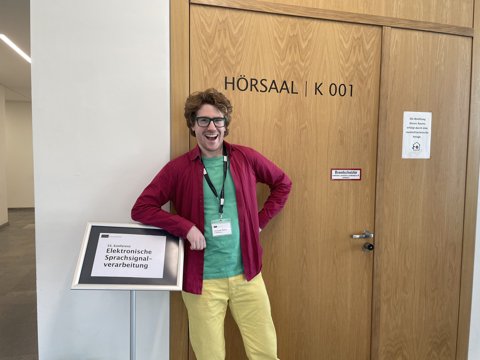
Here I presented the paper about processing pause contents that we (Christian Schuler, Shravan Nayak, Debjoy Saha, Timo Baumann) had submitted.
2023
-
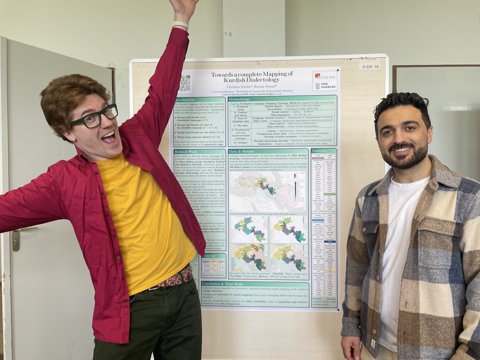
Towards a Complete Mapping of Kurdish Dialectology
There exist a plathora of Kurdish dialects that are often unintelligible to the native speakers of each other. However, Kurdish is considered to be a dialect continuum with at times sudden language shifts and sometimes smooth transitions from one dialect to the neighboring one. At first it might seem confusing and counter intuitive that it has been found, that Central Kurdish is considered to be very understandable by speakers of Northern Kurdish and Southern Kurdish to be understandable by speakers of Central Kurdish- but speakers of Northern Kurdish hardly being able to understand Southern Kurdish. An explanation for this can be found in the prior mentioned dialect continuum- where 'Central Kurdish' is not necessarily 'Central Kurdish', since there exist many differen subdialects of Central Kurdish. Which are there, where can they be found, is what we try to figure out here.
-
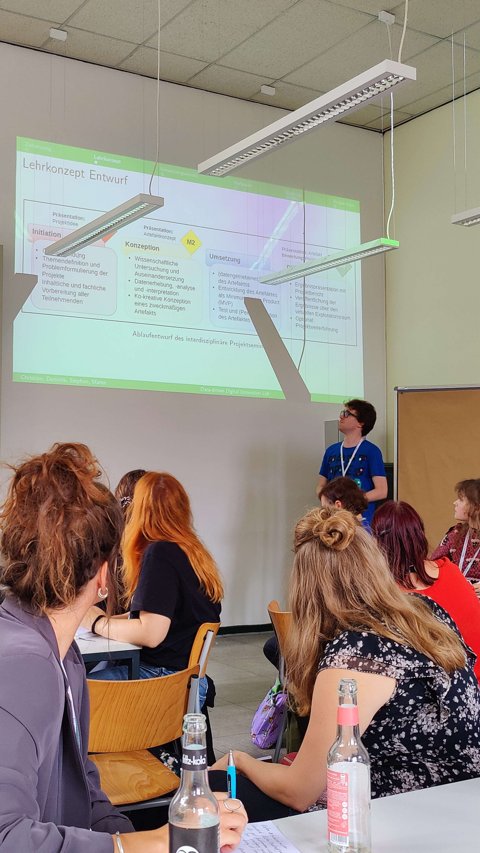
Data-driven Digital Innovation Lab
Here I presented inside a "Pitch Session" our research project Data-driven Digital Innovation Lab (Christian Schuler, Dominik Hauser, Stephan Leible, Maren Gierlich-Joas).
-
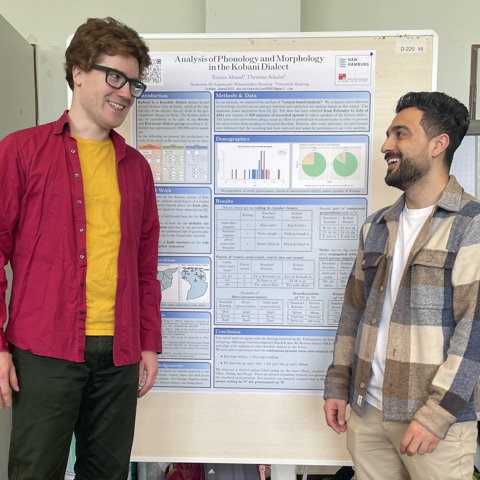
Analysis of Phonology and Morphology in the Kobani Dialect
Kobanî is a Kurdish dialect spoken in and around Kobani (Ain al-Arab), which is the capital city of the district 'Ain al-'Arab in the governement Aleppo in Syria. The Kobanî dialect can be considered to be part of the Southern Kurmanji dialect-group and has approximately 200,000 native speakers. This is a computer-aided analysis of the Kurdish dialect Kobani, based on speech data collected from dozens of native speakers from various villages of that region.